
杀人回忆
China’s market structure improves in H1 as AI, robots drive emerging industries_我的网站

A |
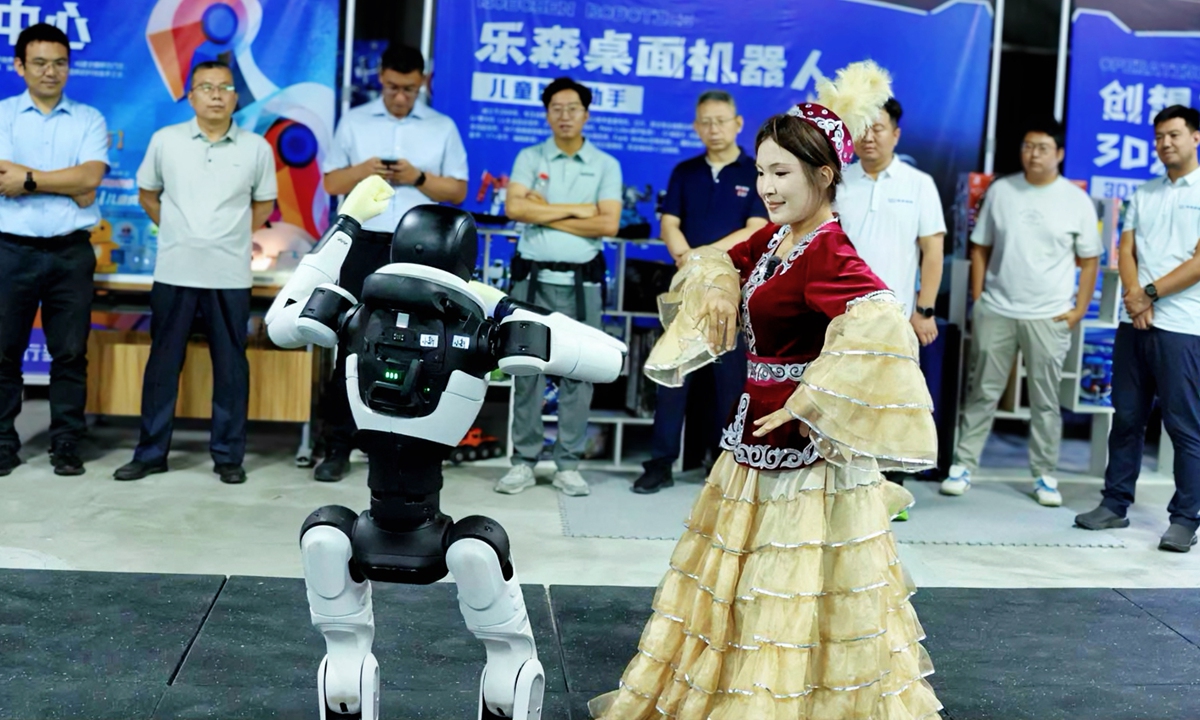
China's market landscape experienced a structural optimization in the first half of 2026, powered by a lineup of emerging and future-oriented industries.
Official data from the State Administration for Market Regulation (SAMR) shows 561,000 new enterprises were registered across China's strategic emerging and future industries, spanning next-generation information technology, high-end equipment manufacturing, generative artificial intelligence (AI) and humanoid robotics.
The rapid expansion of these new market players is revamping China's industrial layout and fast-tracking the cultivation of new quality productive forces, underpinning steady high-quality economic upgrading, experts said.
Cutting-edge technology sectors stood out as the brightest growth spots, posting explosive year-on-year expansion. The generative AI industry recorded a 28 percent surge in new start-ups with 55,000 newly established firms, while the humanoid robot sector saw a 9.5 percent rise, adding 116,000 new enterprises.
"It shows that China's innovation momentum is exceptionally strong and remarkably broad-based — a trait that is virtually unique in the global landscape," Chen Jing, a vice president of the Technology and Strategy Research Institute, told the Global Times on Sunday. "The explosive growth of new enterprises in AI and robotics reflects the extraordinary depth and diversity of China's industrial ecosystem."
Outside high‑tech sectors, 3.957 million new services‑sector enterprises were established and booming emerging‑consumption businesses injected fresh impetus into domestic demand, the SAMR said.
The number of new firms in software and telecommunications services rose 3.3 percent to 322,000. Inspection‑and‑testing businesses soared 43.9 percent, and entities dedicated to the commercialization of scientific‑research achievements climbed 6.8 percent to 459,000.
Manufacturers accelerated industrial upgrading with companies moving up the value‑chain ladder, the SAMR said.
High‑end equipment industries have maintained growth during the first half, with 28,000 newly registered firms and a year‑on‑year increase of 2.5 percent.
A total of 330,000 high‑tech‑manufacturing enterprises were operating as of the end of June, including 15,000 newly established ones. Start‑ups engaged in the production of spacecraft and launch vehicles rocketed 185.7 percent. New producers of fiber optic cables climbed 129.4 percent and integrated‑circuit businesses increased by 24.2 percent.
"We are witnessing a dual-engine growth model, where new consumption in the services sector and high-tech services reinforce each other, while the digital and real economies integrate at an accelerating pace. At the same time, the intelligent transformation of manufacturing is picking up speed," Chen said.
The dividends from this industrial transformation are generating a powerful multiplier effect, creating a virtuous cycle led by innovation, Chen noted.
"The first‑half growth and structural shifts among China's market‑based businesses mirrored the country's overall economic momentum and industrial makeup. New‑emerging sectors, core strategic pillar industries and forward‑looking future industries registered the fastest business expansion," Tian Yun, a veteran economist, told the Global Times on Sunday.
These solid achievements fully reflect the success of China's innovation-driven economic strategy.
Strong policy support for specialized, sophisticated, unique and innovative enterprises has fueled this industrial boom while these market players have helped China shore up, upgrade and extend its industrial chains, Tian noted.
This business boom lines up with this year's stellar foreign trade figures, Tian noted.
China's exports rose 23.9 percent year-on-year in dollar terms in July, data from the General Administration of Customs showed on Friday.
Exports of high-tech products, including industrial robots and 3D printers, surged by more than 50 percent year-on-year, outpacing the 39 percent growth recorded in the first half of the year, according to the Xinhua News Agency.
The growing pool of high‑quality market players signaled lasting improvements in China's global competitiveness, industrial upgrading capacity and the standard of goods and services. Broader product ranges, better‑made commodities and improved supporting services will deliver durable new‑growth momentum, Tian noted.
。

B | 1月13日,据报道,“东芝客户解决方案公司”是夏普从东芝手中收购的一家计算机业务子公司,今年以来正式更名为“DynaBook”。

C | 为了纪念东芝“DynaBook”首次亮相30周年,夏普将一本30周年纪念笔记本带到了2019年的CES上。据日本媒体报道,纪念版DynaBook配有13.3英寸液晶显示屏和i5-8350U处理器(4核/8线程,1.7GHz)。值得一提的是,这款笔记本非常薄,据说重量不到800克,还配备了东芝的传统局域网网络接口“DynaBook”。J-3100SS DynaBook笔记本电脑首次使用这个名字,它于1989年首次亮相。

D | 这本笔记本只有A4纸大小,当时比较便宜。本笔记本配有80C86 CPU(主频10MHz),液晶屏(分辨率640*400),电池寿命2.5小时。

E | 这款笔记本在发行后一年内售出17万台。

F | J-3100SS Dynabook Sharp尚未公布这本纪念笔记本的销售细节。预计将在日本国内上市,然后根据市场反应,正式决定国际市场的销售计划。
Current article:http://7jikuzx.minpinpengcemiuanjiuxuan.pics/news/20260826_6109370.html
Published on:15:01:09
栏目相关
- 吉南辽北蒙东六市开展多领域合作 考察座谈共绘发展新蓝图
- 两部门紧急拨付1.2亿元 支持西藏吉隆泥石流应急抢险救灾
- 马斯克母子再赞中国!上海是一座很棒的城市 强烈推荐游览
- 男子狂薅车企羊毛:网购870个虚拟号窃电超40万元
- 国家级都市圈再落子,为何是它?
- 福建深远海养殖再升级 全产业链目标产值500亿元
- Former President Donald Trump Pleads Not Guilty in Georgia Racketeering Case
- 蒸汽平台游戏总数超过30000场,预计2019年将超过40000场。
- 两部门发文推动服务类社会救助发展
- 克莱:当年为防止伤腿肌肉萎缩 我做了大量的单腿深蹲和提踵训练
- 奖励一个联盟第一+输51分!记者:灰熊若没进季后赛 能保住首轮签
- 漳浦推出三场文旅促消费系列活动
热门排行
- “黄四姐”牵手“刘三姐” 湖北建始上演民族交融盛会
- Ordinary Life Resumes in Sierra Leone After Violent Protests: What Happened and Why?
- 小米印度总监称赞中国的高速铁路:如果它在印度推出,城市间旅行将是一个新的。
- Inside Asia’s oldest private library, guarding ancient scrolls in the age of AI
- 新三板创新层公司微特电机大宗交易溢价1.05%,成交金额417.6万元
- 《红色沙漠》新更新加入“水面奔跑”机制 玩家可踏水疾行引热议
- 生意社2026年8月18日PTA行情观点:上涨
- 《死神》动画原创封神 井上织姬与BOSS一换一
- OpenAI 秀肌肉,与博通共研的 Jalapeño 芯片将向英伟达 GB300 发起挑战
- Digital Realty获50兆瓦额度,拟建在新加坡第四座数据中心
- 特斯拉人形机器人能搬快递了!FSD年底可全球推送
- 一线记者讲故事 | 明明是赔本买卖,这些小店为何甘愿坚持?