
京东
How technology boosts Beijing's air pollution governance_我的网站

A |
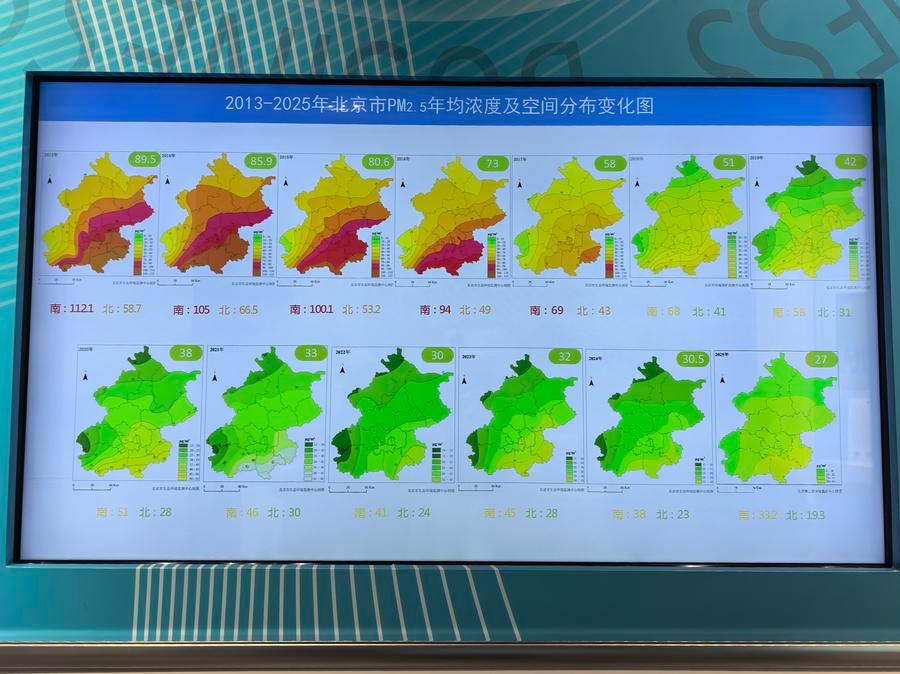
In 2025, Beijing recorded 311 days with good air quality and only one heavily polluted day, compared with 58 heavily polluted days in 2013, when the city officially began releasing PM2.5 monitoring data. The annual average PM2.5 concentration, a key indicator of air quality, fell from 89.5 micrograms per cubic meter in 2013 to 27 micrograms per cubic meter in 2025, a decline of nearly 70 percent.
The progress has drawn international attention. The United Nations Environment Programme has highlighted Beijing's experience in improving air quality as a model for other cities.
According to experts at the Beijing Municipal Ecological and Environmental Monitoring Center, the cleaner air is the result of a comprehensive system integrating environmental monitoring, scientific analysis, policymaking, regional cooperation and law enforcement -- with digital technologies now woven into every link of that chain.
MORE TARGETED APPROACH
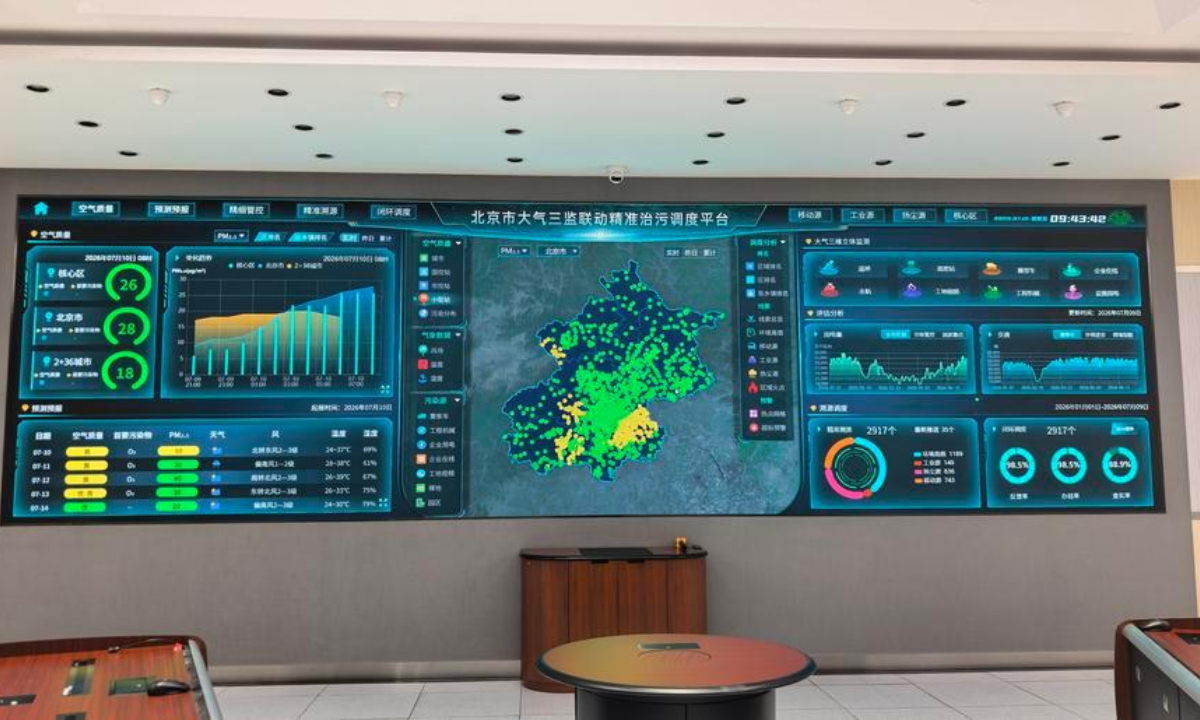
Effective governance begins with accurate monitoring. Beijing has established a multi-level air-quality monitoring network. Figures show 35 standard monitoring stations across the city continuously measure six major pollutants, while more than 1,000 compact sensors deployed across communities and townships provide more detailed information on local air-quality variations.
The monitoring system was gradually built by the Beijing Municipal Ecological and Environmental Monitoring Center, one of China's earliest ecological and environmental monitoring institutions, responsible for monitoring Beijing's air, water, noise, soil environments and ecosystems.
The center has developed an analytical system that can identify around 125 components of PM2.5, covering most of its composition and helping researchers trace pollution sources.
"Source analysis helps us identify the major contributors to pollution at different stages, providing a scientific basis for policymakers to target key emission sources," said Li Yunting, technical director at the center.
Coordinated by the Beijing Municipal Ecology and Environment Bureau, the center has conducted four rounds of PM2.5 source analysis studies with other institutions, with results released in 2014, 2018, 2021 and 2025.
The latest analysis showed that regional transport contributed 57 percent of Beijing's PM2.5 pollution. Among local sources that accounted for the remaining 43 percent, vehicle emissions and residential sources represented the largest share of pollution, a distinctive characteristic of a major international metropolis.
The monitoring results have provided scientific support for a series of pollution-control measures. For example, Beijing has promoted new-energy vehicles to reduce transport emissions and adopted advanced techniques, including air-supported membrane structures, to control dust emissions. Meanwhile, coal combustion pollution, once a major contributor, has almost been eliminated and is no longer listed among the main sources, reflecting broader national efforts to reduce coal consumption, promote clean energy and upgrade heavily polluting industries.
With PM2.5 concentrations now at relatively low levels, further gains in air quality will depend on more targeted, science-driven approaches.
SMARTER ENVIRONMENTAL GOVERNANCE
Beyond monitoring pollution, Beijing has built a data-driven environmental governance system that links monitoring, regulation and enforcement in a closed loop from detection to action and follow-up evaluation.
Developed by the center and known as the innovative regulation-monitoring-inspection linkage model, the system integrates artificial intelligence, the Internet of Things, satellite remote sensing and vehicle-mounted monitoring technologies to pull together environmental data from multiple sources onto a unified platform.
"The system brings information that was once scattered across different departments onto a single platform," said Zhang Likun, director of the smart system division at the center, adding that this enables off-site enforcement and joint cross-sector actions involving housing, water resources and transportation, significantly improving the efficiency and precision of environmental management.
Using more than 30 intelligent algorithms, the platform automatically analyzes data and identifies potential pollution risks, based on which monitoring staff identify the most pressing problems and forward them to enforcement departments.
The approach has already drawn international attention. Clean Air Asia, an international nongovernmental organization focused on improving air quality across Asia, featured the system as a representative case study in its "China Air 2025" report. The model was also presented at the 2026 Better Air Quality Conference and recognized with the Certificate for Clean Air Best Practice Sharing.
China has integrated ecological conservation into its modernization drive. As the country speeds up efforts under the Beautiful China Initiative, Beijing's experience demonstrates how technology can support more precise, coordinated and sustainable environmental governance.
。 用恰当的物种名称进行保护科普传播,讲好保护故事,具有典型性和代表性。摄影/葛玉修 在2024年全国两会召开的时候,葛玉修发来他的两会建议。这个建议,是关于希望有关部门规范中国特有珍稀物种规范命名的,更确切地说,是希望通过给中华对角羚正名,来帮助提升中国物种保护的民族自信心和自豪感。

B | 2016年中国生物多样性保护与绿色发展基金会(简称绿会)创新推出了绿会保护地体系,葛玉修率先申请在青海湖畔创建设立中华对角羚保护地,成为中国绿会首批创建的保护地之一。 中华对角羚是葛玉修为这一物种起的名字,而目前的名字普氏原羚是以一位沙俄军官的名字命名的。葛玉修认为这个名称并不合理。保护地设立后,他在推动物种保护的同时,始终坚持对其更名。 中华对角羚是中国特有种,曾广泛分布在内蒙古、宁夏、甘肃、青海等地,被当地人称为“黄羊”。在三年困难时期,国家遭遇大饥荒,人们通过猎捕黄羊,补充食物供给,挽救了无数人的性命,但该物种因此大量减少,到上世纪90年代,在青海湖周边仅存不足300只。摄影/葛玉修 草场围栏的推广,也对中华对角羚造成了威胁。这些钢丝围栏自20世纪80年代引进后逐步在牧区推广应用,目的是控制家畜牧食活动、调节牧草供求平衡,促进退化草原植被恢复,并固定草原使用权。围栏的高度一般在1.2~1.5米之间,大都带有刺丝,给野生动物迁移带来很大干扰。中华对角羚因跨越围栏勾挂致死的情况时有发生,围栏圈地也压缩了它们的觅食空间,影响了它们的自然活动和种群间基因交流,对包括中华对角羚在内的濒危野生物种的种群恢复带来了不利影响。 保护地成立后,绿会联合中国科学院昆明动物研究所、志愿者和媒体开展了中华对角羚的研究与调研,包括向青海省政府有关部门发建议函,希望能调整围栏高度,减少围栏数量,不要使用刺网,保障中华对角羚安全迁移与觅食空间,其中仅葛玉修个人就先后给青海省政府递交了8份建议;加强中华对角羚基因采集与研究,在国际学术期刊《保护遗传资源》(Conservation Genetics Resources)发表科研论文;组织巡护,联合当地牧民加强中华对角羚巡护救助;开展公益宣讲,其中葛玉修在全国26个省区市演讲640余场,受众达30余万人。 这些保护行动,收获了最直接的回报:现在,中华对角羚的数量已逐步恢复到3400多只。 “情况在不断好转,青海省政府部门对中华对角羚的保护意识和保护力度也有了很大提升。”葛玉修感谢各界积极努力的成效和有关方面对自己的认可,但他强调,目前还没到松一口气的时候,中华对角羚的种群危急状况依然亟待进一步缓解,“这也是我为什么想要提交这份两会建议的原因”。 在葛玉修看来,中华对角羚从广泛分布到极度濒危,再到快速恢复,这个物种的每一种状态都与中华民族有着深刻的情感羁绊,因此更应该使用具有文化特色和物种特征的中文名称。“不一定要用我起的名字,有其他更好的建议,有关部门都可以考虑采纳。” 葛玉修强调的更名,是有先例可循的。

C | 比如普氏裸鲤(即湟鱼),已经正式更名为青海湖裸鲤。中华对角羚的情况和青海湖裸鲤一样,都是中国本土特有的珍稀濒危种,使用更恰当的中文名称也是应有之义。 作为绿会中华对角羚保护地主任,葛玉修坚持呼吁,“用恰当的物种名称对其进行保护科普传播,讲好保护故事,具有典型性和代表性。” 现在,以葛玉修为代表的绿会中华对角羚保护地,早已不局限在某一单独物种的保护层面,而是通过对核心物种的保护,带动更多人关注并热爱青海湖边美好的生态环境。这种热爱,是最富感染力的保护。 (作者工作单位系中国生物多样性保护与绿色发展基金会) 来源:《小康》·中国小康网 作者:王静 校对:李旭颖 审核:龚紫陌。

D |
Current article:http://7jikuzx.minpinpengcemiuanjiuxuan.pics/b3agwbr/dh1qxsk.html
Published on:00:10:28


1
【“翼”佳节】寻年文化节——西安航空基地第一幼儿园“温情冬日 快乐冬至”主题活动纪实2
《死侍者2》的国内版本已经过检查。这部电影的片名已暂定。死侍者2:我爱我的家人。3
重磅操作!詹姆斯贷款3亿美元曝光 抵押未来场外收入从而提前变现4
5100万引进!官方:31岁拜仁中场帕利尼亚加盟本菲卡,总价1900万5
OpenAI 攻上浏览器“高地”6
MTV cancels EMAs awards show in Paris, citing Israel-Hamas war7
重金属总量(铅)、邻苯二甲酸酯等超标,fata moda牌儿童拖鞋被召回8
国足零封世界杯参赛队!9
官方:中国女篮今夏将在临沂、济南等6城举办热身赛10
妊娠発表から2カ月〝今限定デニム〟マタニティコーデの藤田ニコルに驚き「どうやって履いて…?」「あっという間に大きくなっている!!」11
火花終止連敗有曙「光」12
宁德时代发布零碳文旅实践标杆 以“四化”方案赋能景区绿色转型13
日本将停止对传统太阳能电池板的补贴14
China turns tennis tournaments into tourism magnet as cities package matches with culture, food and city experiences15
【品种策略】锌:08月26日多家期货公司晨报观点汇总
- 随机推荐
1
制造业投资增速106.4% 拱墅算力经济的向新答卷2
世界杯收官,精彩不止赛场——尼康以专业影像助力记录每一个精彩瞬间3
New 10-year plan to end domestic violence in Australia4
Putin insists Ukraine's new US-supplied weapon won't change the war's outcome5
欧洲联赛主席:改革FIFA这套全球管理体系远比换掉因凡蒂诺更关键6
同比增长10.80% 一汽红旗5月销量突破3.41万辆 还有限时焕新礼遇7
全车NISMO外观套件+动力操控全面提升 日产Armada NISMO官图发布8
蓝思科技:公司在AI眼镜领域已实现核心卡位9
汇丰香港:遵循监管要求邀请相关中国内地投资者提供自我声明,仅适用于投资服务客户10
《鬼武者》新作实机公开:全新BOSS亮相 试玩版更新11
AirPods Pro 2值得等待吗?这款不到1K售价的旗舰耳机更值得入手_Enco_产品12
Ali Fazal to Collaborate With Shakun Batra for a Film on Social Media & Modern Relationships13
奋进强国路 阔步新征程丨让绿色发展成为城市振兴最美底色14
苏炳添、巩立姣领衔中国队田径世锦赛参赛阵容15
泽连斯基承认骗了特朗普,称是被乌克兰国防部误导